
Ah, those gorgeous things… slab backsplash can take any kitchen from good to great – it looks gorgeous, right? Well, there are some things you should know before deciding on it.
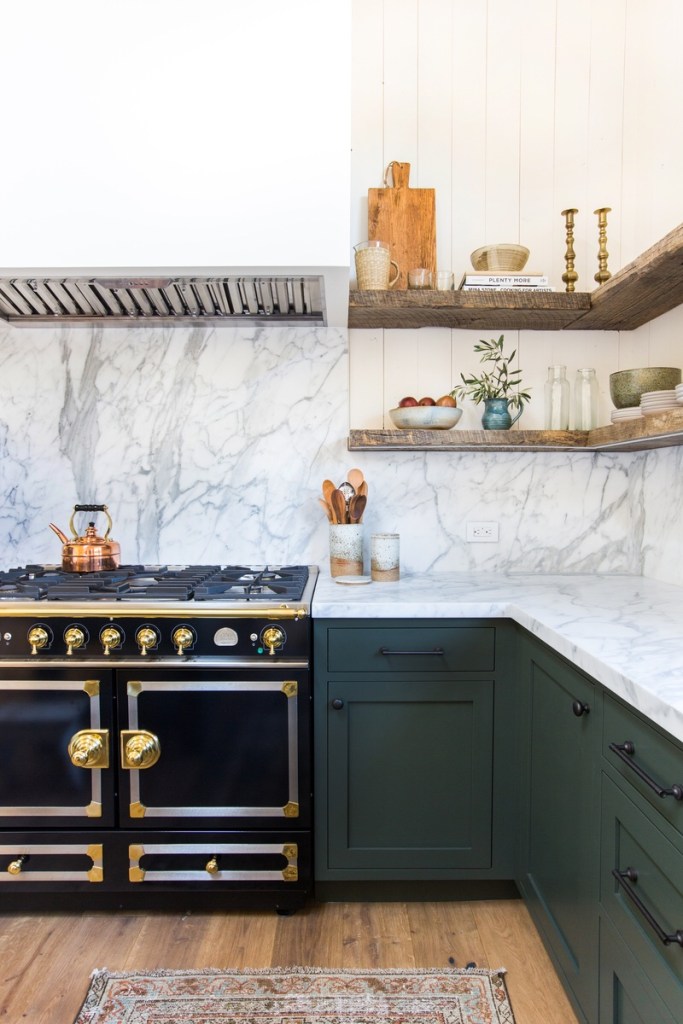
The material that is used for a backsplash usually matches that of the countertop, creating luxurious flowing feel. The backsplash is in the direct line of vision and a gorgeous slab of stone does wonders to the decorative value of the kitchen. It creates bold look with that unbroken plain that is nearly essential to both modern and contemporary kitchens. Marble or veiny backsplash creates a beautiful backdrop for the kitchen that is perfect for open concept spaces. Additionally, there are no grout lines to take care of, so cleaning is a breeze, just wipe it down, and it will last much longer than any tile would. And, c’mon, it’s plain gorgeous. The question is, would it be right for you?
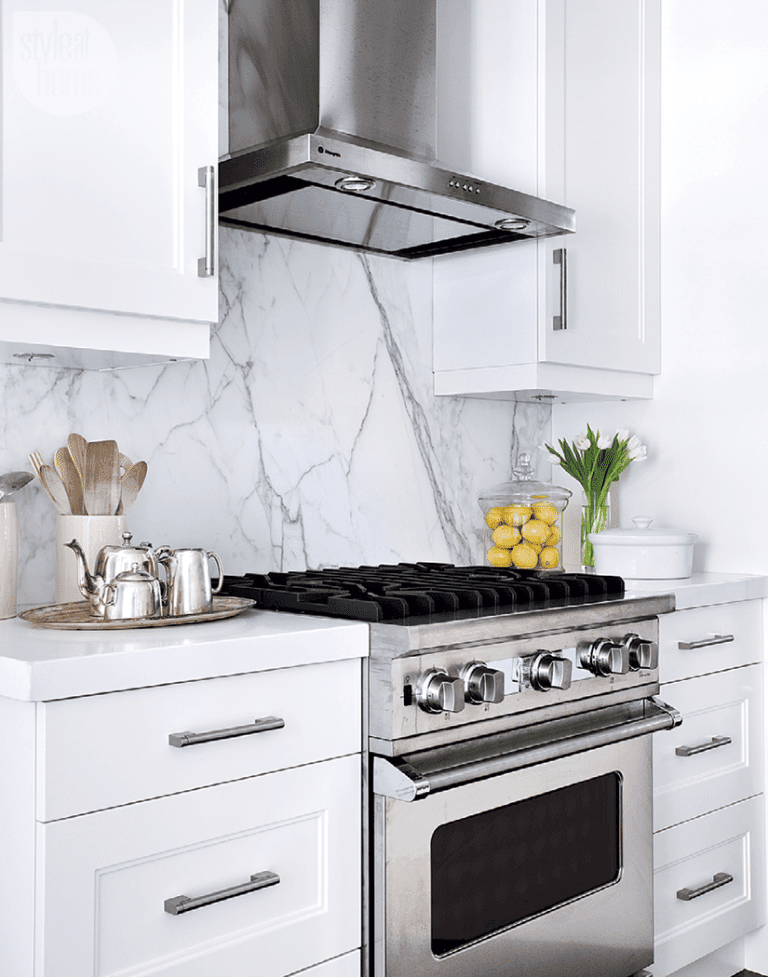
First of all, what color pallet are you working with? If you are using more than three colors on one kitchen, you might need the backsplash to tie the kitchen together, color wise. Backsplash is a big part of your kitchen and oftentimes used to bring together floors, cabinets and walls, hence the popularity of mosaic backsplash. However, if your color palette is more or less consistent, then slab backsplash will look at home in your kitchen. Also, keep in mind, the countertop and backsplash material does not have to match, but having them contrasting is not a good idea.
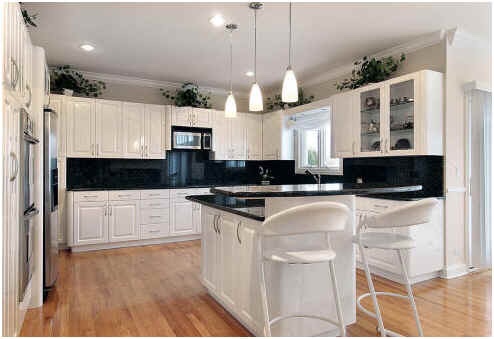
Second, think about the space. Stone backsplash is a pretty bold statement, and the last thing you want to have is it stuck in the narrow space between wall and base cabinets around the kitchen. Not a sexy look, IMHO. You are risking giving your kitchen a rather strange look, especially with contrast colors.
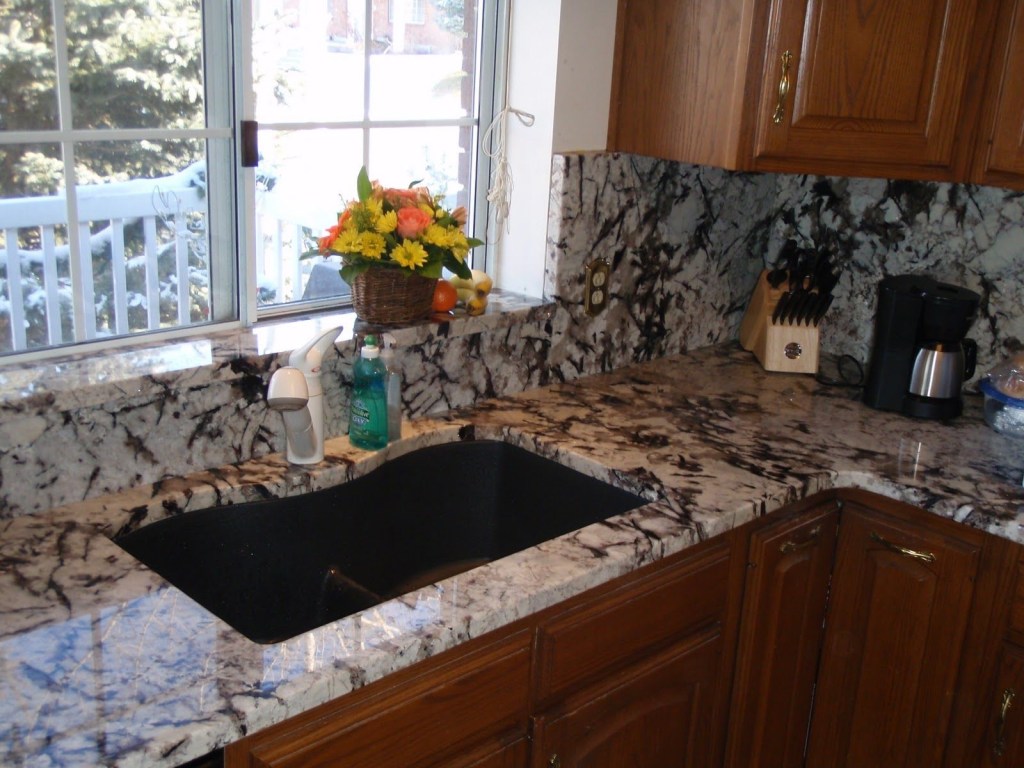
And, since we are on the topic of sexy, third: be careful with patterns! Both patterns of the stone (above) and around the stone (below). Don’t get me wrong, I love my bold piece of granite and would slap it on almost anything. But an overdose is possible, your kitchen might end up looking like a tomb. A very pretty one…
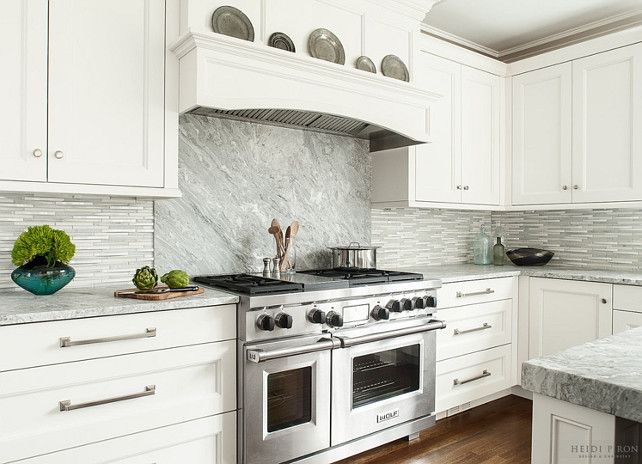
And, when doing a combination backsplash, make sure that the stone has a canvas, something plain and simple. Multicolored mosaic tile next to a stone is a little overwhelming, I think. Plain white tile would be much more suitable, providing the necessary backdrop for the gorgeous stone to shine!
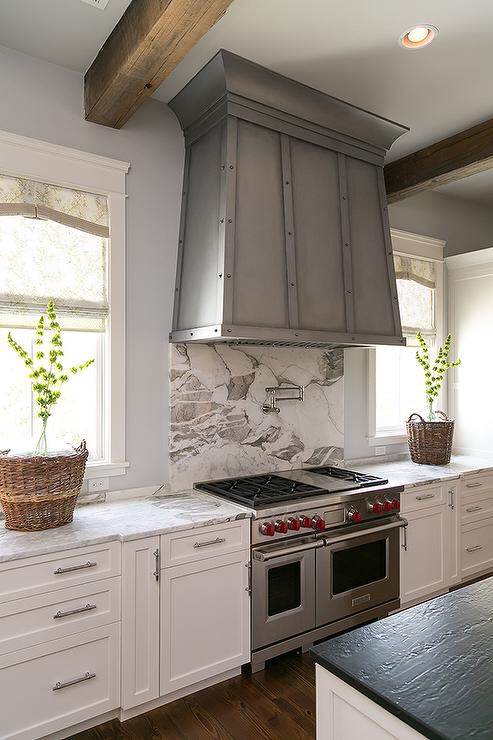
Fourth: think about the thickness of the stone. Odds are, it will be standard 1 1/4” thick. It might not be a huge problem, but something you need to be aware of, so plan for ways to end that backsplash without it sticking out, think about bumping the base cabinets out to make sure that the backsplash is not eating away the countertop space, and think about appliances (mainly, the range).
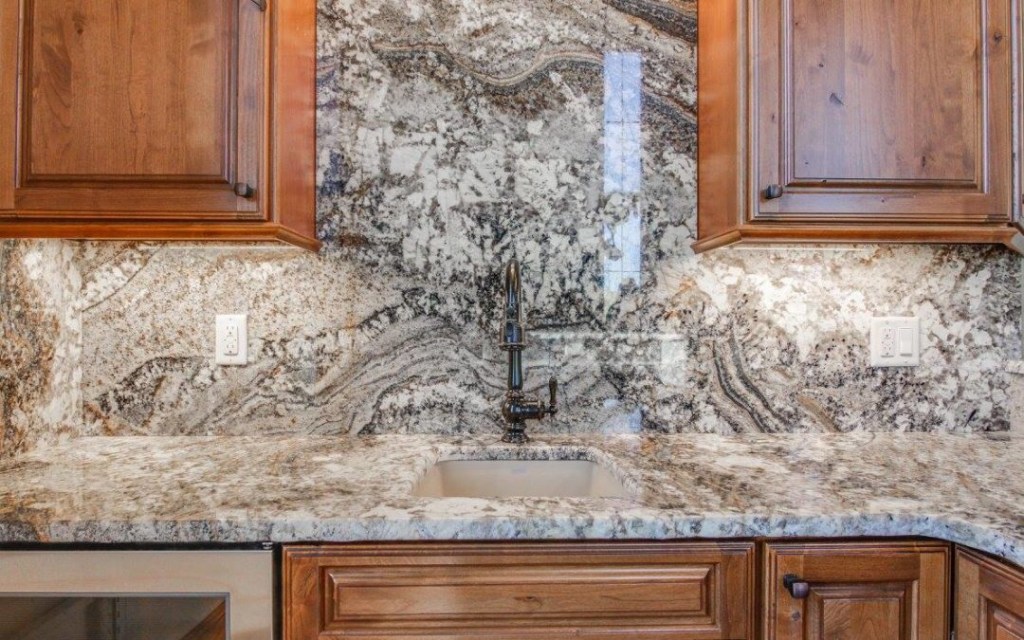
Fifth: think about switches and power outlets. To me, putting standard outlets and switches into stone backsplash borders vandalism, very closely too… please, explore your options! There are angle strips that are mounted under wall cabinets (those come with lights too), there are pop-up ones that hide inside the countertop when not in use… please, pretty please, don’t drill holes in your stone!
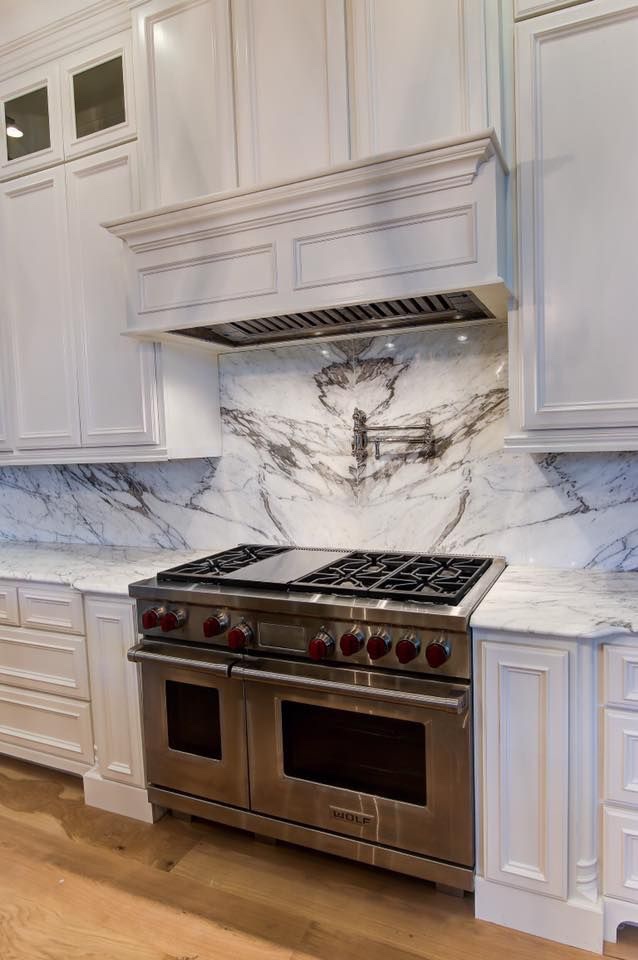
Sixth: think about the pattern of the stone. Do you want veins stretching across the backsplash, or would you like to recreate a Rorschach test? Up to you. If you prefer the latter (I, personally, do), make sure that you are looking for book matched slabs. Those are slabs taken from the same place one after the other, so nearly identical in pattern. With those slabs, pattern can be mirrored creating a show stopping pattern!
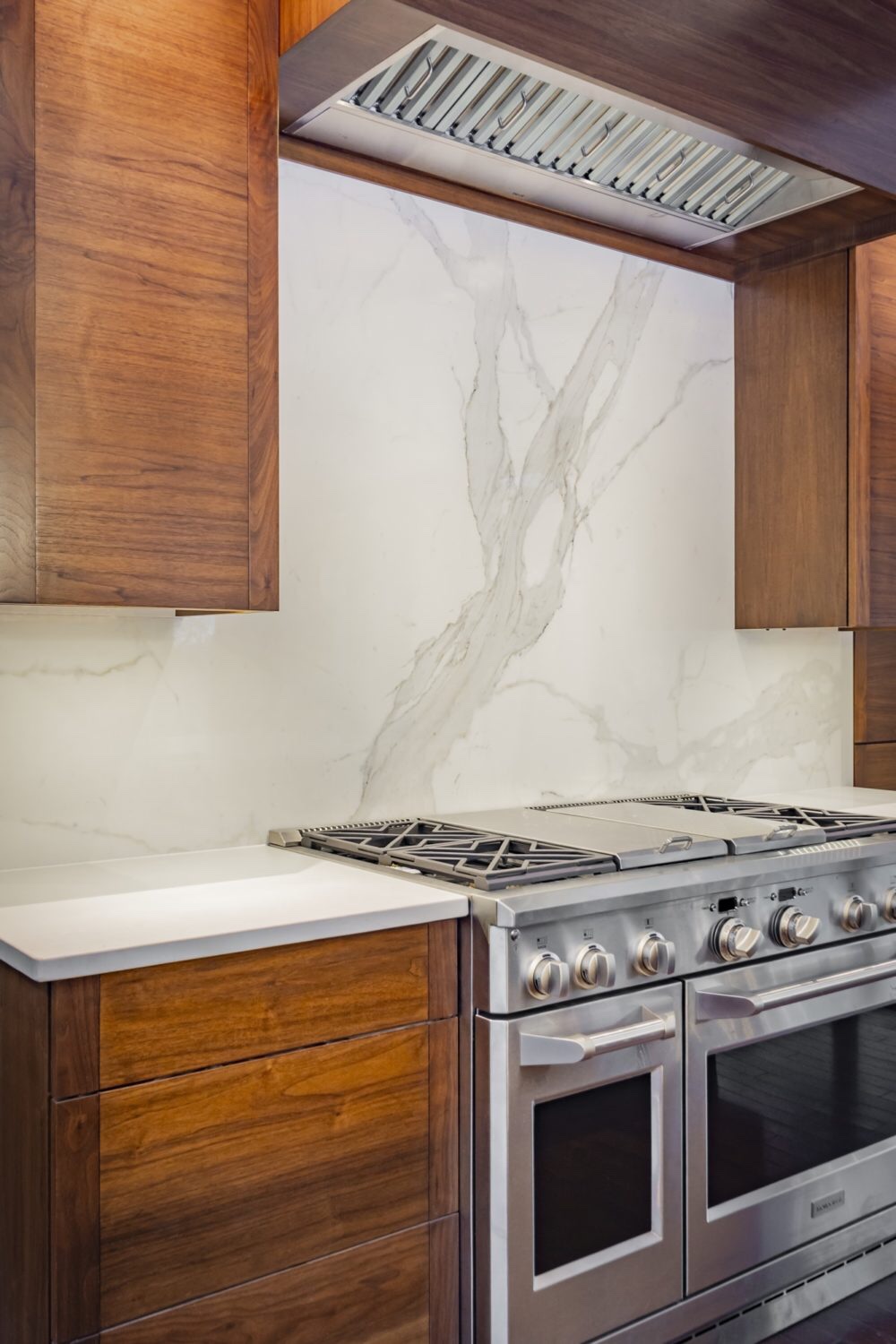
Seventh (I think I’m pushing it..): think about the overall style of your kitchen. For a modern or contemporary kitchen designs, the full backsplash is the way to go: it gives that clean, seamless look to the kitchen that supports the overall design and makes a bold statement.
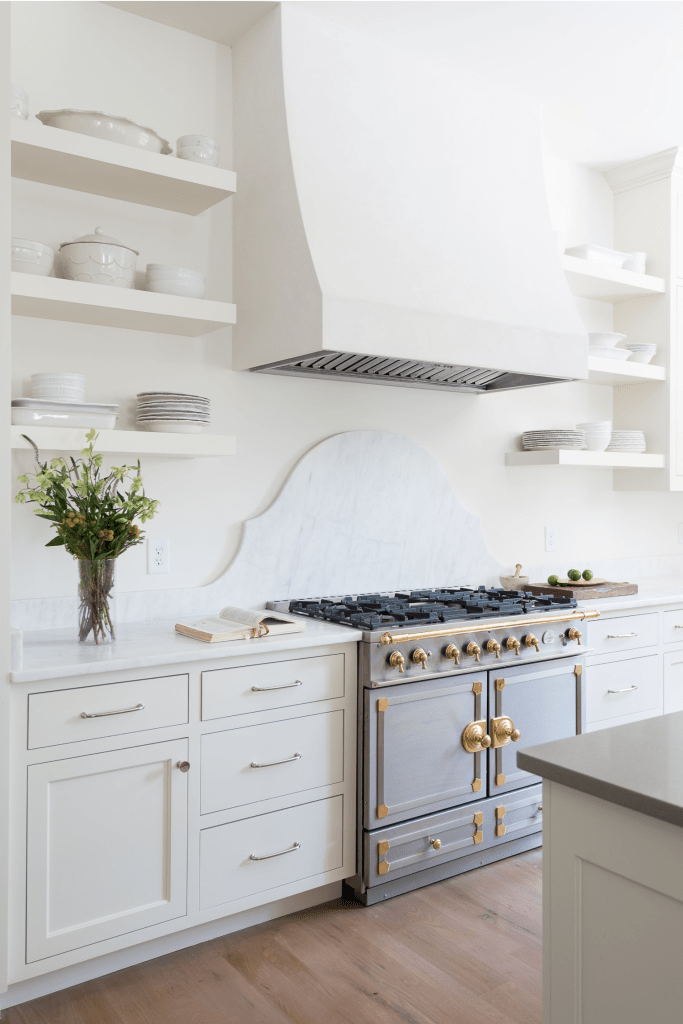
If you are going with a classic design, maybe full slab backsplash is not for you. A stone plate behind the range might be more fitting. Adding some curves allows for a smoother transition, adding charm and elegance.
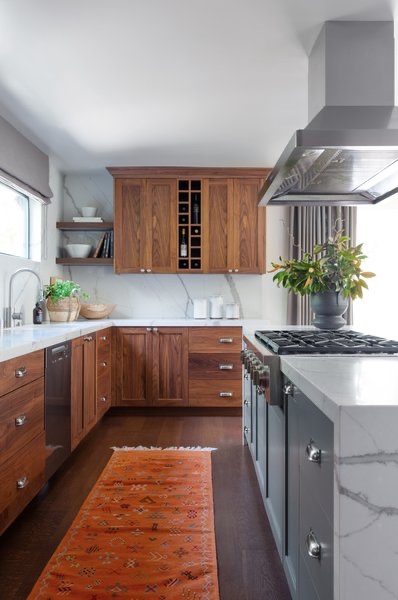
So, those are the main points (besides the obvious) I think should be considered before going with a slab stone backsplash. The obvious would include: maintenance, cost, kitchen size and placement. Regarding maintenance, if you are going with natural stone (be it marble, granite or quartzite), it will need to be sealed, just as the countertop; quartz, on the other hand, would be virtually maintenance free. In both case, you would not have grout lines to worry about.
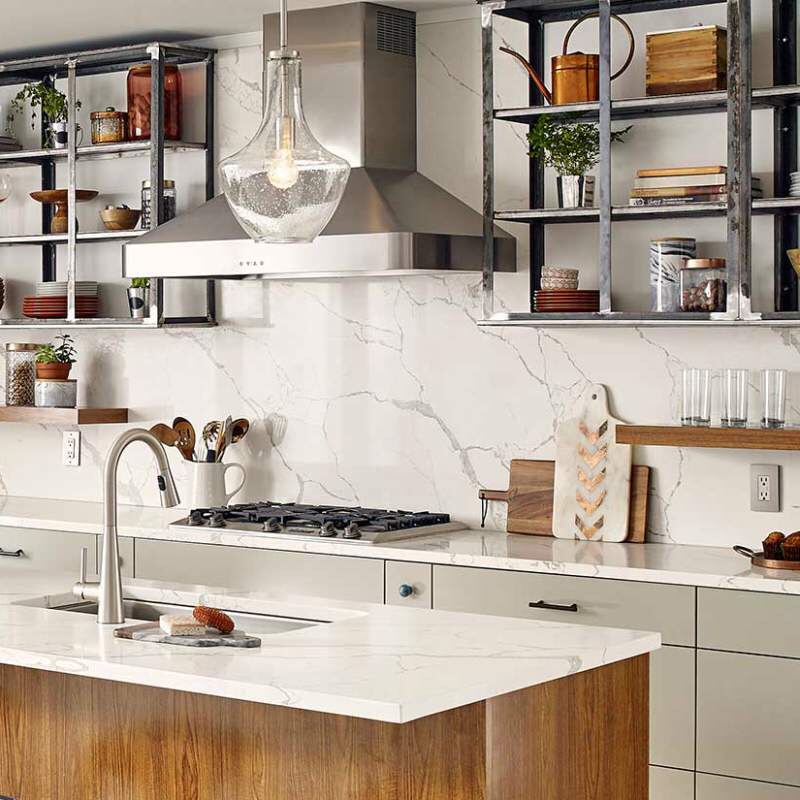
Slab backsplash is not a budget project, but it shouldn’t cost an arm and a leg. Yes, it’s not 20$ per foot tile, nor is it 350$ per foot tile (that tile is to die for!). The per square price on the backsplash would be the same as the price of the countertop, so figure around 80% of the countertop cost, if you are stretching the backsplash around the entire kitchen.
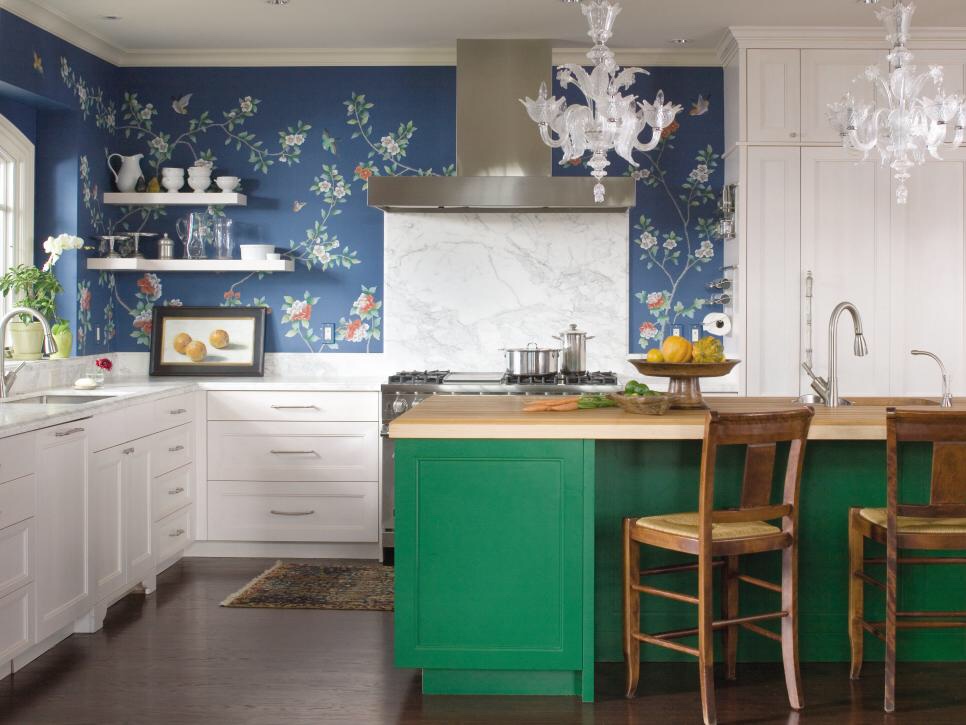
With size, smaller the kitchen, smaller should the slab be. Putting such a prominent piece in a small space will, in most cases, make the piece dominant. It might crowd out the rest of the kitchen, and all you’ll see is that stone (which is not necessarily a bad thing). In a small space, going with a stone/tile combination would be a safer option.
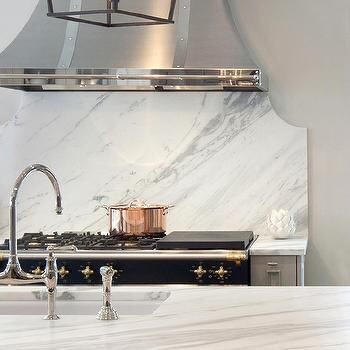
Placement is a matter of choice in this case, IMHO. Whether you want it on one wall only, around range only, or all the way around – your taste and preferences are the things to go by.
If you are ready for a bold and beautiful statement in you kitchen, give me a call, I’m always happy to help!
 TG Kitchen